
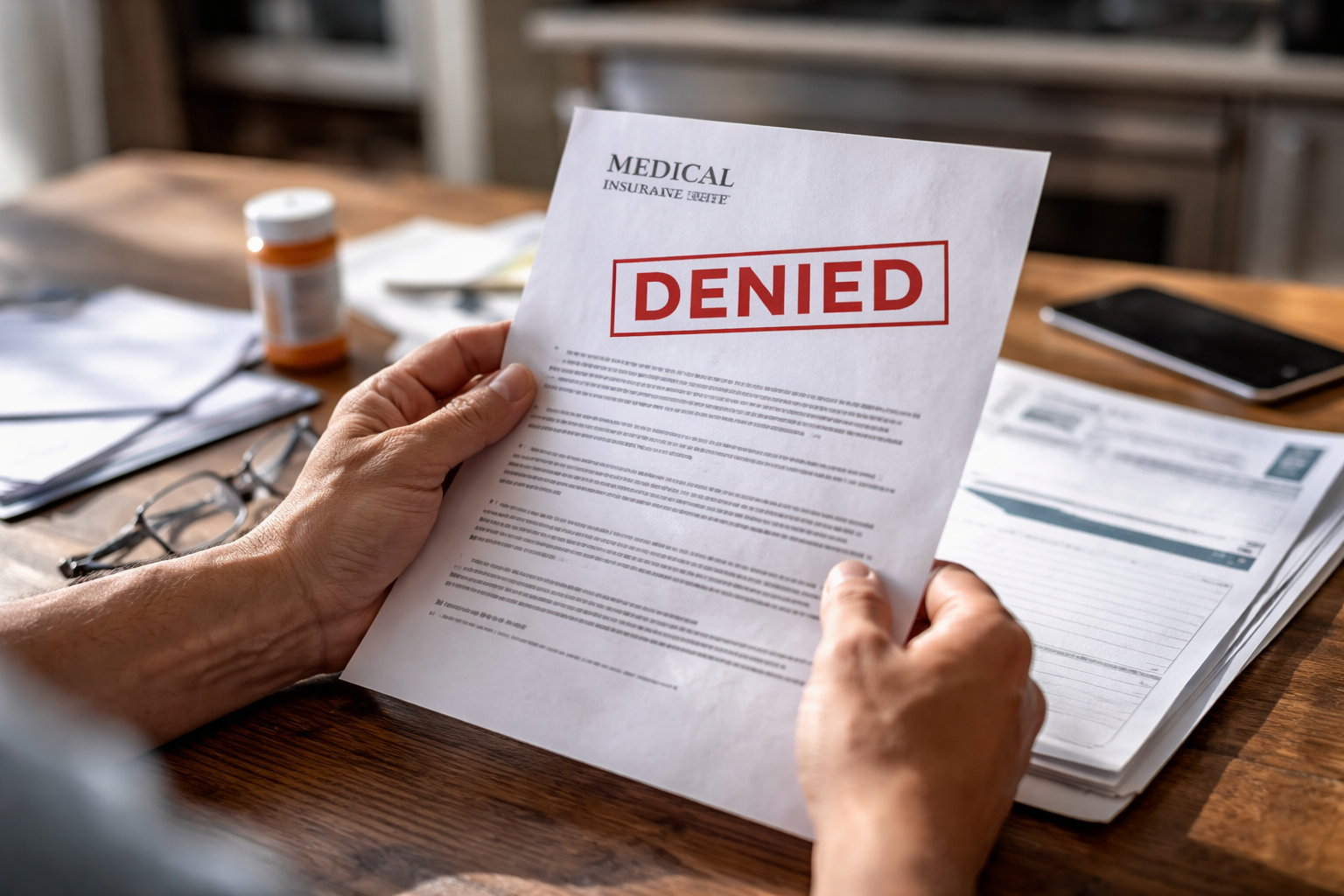
Insurance denied experimental treatment appeal — that phrase was sitting in the denial letter when I opened it at the kitchen counter. Not “pending.” Not “needs more info.” It said the treatment my specialist recommended was “experimental” and therefore not covered. In that moment, the room went quiet in a way that’s hard to explain. The care plan didn’t change. The clock did.
I wasn’t looking for a fight. I was looking for treatment. But once the insurance denied experimental treatment appeal notice arrived, I understood something clearly: this would not fix itself unless I structured the response the way the system expects. If you’re here because your insurance denied experimental treatment appeal was rejected or you’re about to file one, this is the playbook that helps you build a record reviewers can’t ignore—without overpromising, without gimmicks, and without putting the burden on you like you “did something wrong.”
If you want the big-picture map of denial types and the fastest routes that typically work, start here first. It makes the rest of this page easier to apply:
Why Insurers Reach for “Experimental” So Often
When a plan uses “experimental / investigational,” it usually isn’t a personal judgment about your provider. It’s a classification triggered by internal policy rules. That matters because your insurance denied experimental treatment appeal can succeed when you target the trigger, not the emotion.
Most insurers run claims and prior authorization requests through coverage policies and “medical policy bulletins.” If the treatment name, indication, dosing, device version, or diagnosis pairing doesn’t match what their policy recognizes as standard-of-care, the request can default to experimental—even when reputable specialists are using it in real practice.
Translation: the denial can be more about “policy mismatch” than “bad medicine.” And policy mismatch is fixable when you document the right evidence in the right shape.
Your First 60 Minutes After the Denial
- Save the envelope and every page. Date stamps matter.
- Find the denial reason code (not just the paragraph explanation).
- Request the plan’s medical policy bulletin for the exact treatment and indication (ask for the current version date).
- Check the appeal deadline and write it down in two places.
- Ask your provider for the original submission packet (prior auth form, clinical notes, letters, CPT/HCPCS codes).
Do not wait until you “feel ready.” Most denials become permanent-looking only because the deadline passes or the second submission repeats the first.
What “Experimental” Usually Means in the Real World
Case A — The insurer’s policy is outdated
The treatment is increasingly used, but your insurer hasn’t updated the bulletin. Your appeal wins by showing: (1) the current guideline position, (2) the evidence base, (3) why older policy language no longer reflects current practice.
Case B — Off-label use with guideline support
This is common in oncology, rare disease, and complex neurological care. Your insurance denied experimental treatment appeal strengthens when the provider cites national guidelines (and not just “studies”) and explains why covered alternatives are not appropriate for you specifically.
Case C — Evidence exists, but the submission didn’t “hit” the insurer’s criteria
The insurer may require failed therapy steps, imaging results, lab thresholds, or specific severity scores. If the request didn’t explicitly state them, reviewers may treat it as investigational by default.
Case D — Coding/wording mismatch
The wrong CPT/HCPCS code, diagnosis code pairing, or incomplete description can cause “experimental” to appear even when the real issue is administrative. In this case, a corrected request can reverse the outcome quickly.
Case E — The plan truly excludes it
Some plans exclude categories even when medically reasonable. Here the focus shifts to exceptions, external review, and whether the plan language was applied correctly to your facts.
Case F — Urgent situation requiring expedited review
If delaying the treatment could seriously jeopardize life, health, or ability to regain function, you may qualify for expedited appeal. Your provider’s documentation must say that plainly, in clinical terms.
What Your Provider Should Write (And What They Should Avoid)
For an insurance denied experimental treatment appeal, the provider letter is the engine. The best letters read like structured clinical logic, not persuasion. Ask your provider to include:
- Your diagnosis and severity (with objective findings when possible)
- What has already been tried (dates, responses, intolerance, contraindications)
- Why covered alternatives are not appropriate for you, specifically
- Exact treatment protocol (drug/device name, dosing, duration, site of care)
- Evidence summary (key studies + guideline statements; keep it concise but precise)
- Direct response to insurer criteria (if the bulletin lists requirements, match them point-by-point)
What to avoid:
- Overheated language (“inhumane,” “criminal,” “obviously works”)—it can distract from evidence
- Vague claims (“supported by research”) without naming what supports it
- Submitting a copy-paste letter that doesn’t mention your unique clinical facts
Ask for a letter that “answers the denial,” not a letter that “argues with the denial.”
If your denial also referenced medical necessity or “not proven necessary,” this page helps you align provider documentation to the standards reviewers look for:
Build a “Reviewer Packet” That Can Survive Multiple Levels
Think of your insurance denied experimental treatment appeal as a packet, not a letter. A packet is harder to dismiss. Here’s a practical, repeatable structure that keeps things clear:
- Cover letter (1–2 pages): denial summary + what you’re asking for + list of included documents
- Provider letter: point-by-point response to “experimental” classification
- Clinical timeline (1 page): symptoms → diagnosis → treatments tried → current status
- Evidence appendix: 3–8 key citations (don’t dump 40 studies)
- Policy bulletin excerpt: highlight criteria you meet (be careful to keep it short)
Clarity is persuasive. You are not writing a novel. You are making it easy for a reviewer to approve.
If the Real Issue Is Prior Authorization, Not “Experimental”
Sometimes “experimental” is the headline, but the hidden issue is a prior authorization process failure: missing documentation, missing peer-to-peer review, missing step therapy proof, or incomplete clinical notes. If you suspect that, handle the administrative layer aggressively.
Here’s the best “system-safe” move: ask the provider’s office to request a peer-to-peer review (if offered) while you file the appeal. That way you don’t lose time.
If prior authorization is part of your denial chain, review this page because it often contains the exact fix that reverses a rejection quickly:
Your Rights: Internal Appeal + External Review
Many U.S. plans must provide an internal appeal process and, in many cases, an independent external review option. If your insurance denied experimental treatment appeal fails internally, an external review can shift the decision to an independent reviewer.
External reviewers are not employed by your insurer. That structural difference matters. The reviewer looks at clinical evidence, plan terms, and whether the denial was applied correctly.
Official federal guidance on external appeals is here:
If you already tried external review and it was denied, this next piece helps you interpret what happened and what options remain:
Common Mistakes That Quietly Kill Appeals
- Missing the deadline because you were waiting on your provider’s office
- Submitting the same packet twice with no new evidence or no response to criteria
- Overloading the reviewer with too many studies instead of the 3–8 best ones
- Not requesting the policy bulletin (so you never target the criteria)
- Failing to document failed alternatives with dates and outcomes
The system rewards specificity. Most “experimental” denials survive because the appeal stays vague.
Self-Apply Checklist: Match Your Situation to the Right Move
- If the denial letter mentions “insufficient evidence” → strengthen evidence appendix + guideline support
- If it mentions “not in policy” → request policy exception review + show updated guideline stance
- If it mentions “step therapy” → document failed/contraindicated steps explicitly
- If it mentions “coding” → correct CPT/ICD pairing and resubmit with clarified description
- If it mentions “urgent” risk → request expedited review with provider clinical statement
As you work through your insurance denied experimental treatment appeal, keep this rule in mind: every paragraph should either answer a criterion or prove a fact. Anything else is noise.
FAQ
Can an “experimental” denial be overturned?
Yes. Many cases turn when the appeal directly addresses the insurer’s criteria and includes targeted guideline/evidence support.
Should I include every study I can find?
No. Reviewers are more likely to absorb a small set of high-quality citations than a massive dump of PDFs.
What if the plan truly excludes the treatment?
You may still pursue exceptions, external review (if available), and plan-language accuracy issues. In some cases, state or employer plan processes matter.
What if the insurer never responds?
Delays happen. Keep proof of submission and follow the plan’s escalation path promptly.
Key Takeaways
- “Experimental” is often a policy trigger, not a final verdict
- Provider letters win when they match criteria point-by-point
- Your appeal should be a structured packet, not a single letter
- External review can shift the decision to an independent reviewer
- Deadlines and specificity matter more than intensity
Before you hit submit, confirm you’re not walking into a timing trap. If there’s any risk you missed a deadline, read this immediately:
The first time I saw insurance denied experimental treatment appeal in writing, it felt final. It wasn’t. It was procedural. The letter was written to sound conclusive, but the process behind it wasn’t. Once I treated it like a documentation problem with a strict timeline, the next steps became clearer and less chaotic.
If your insurance denied experimental treatment appeal is sitting in front of you right now, do three things today: request the insurer’s current medical policy bulletin, ask your provider for a point-by-point support letter that matches that bulletin, and submit a packet that looks materially stronger than the original request. Do not wait for a “better moment.” The best moment is inside the appeal window—starting now.