
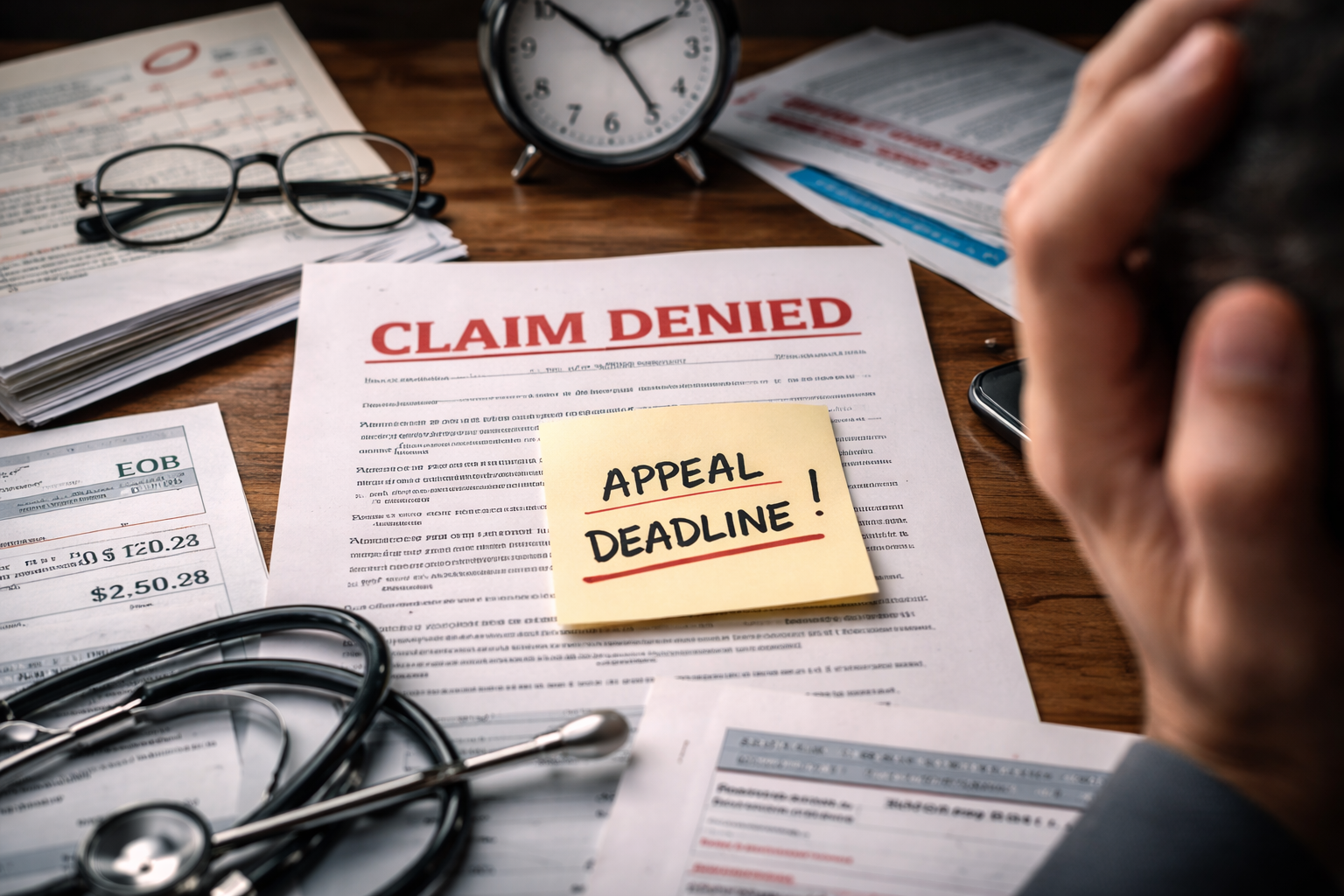
Insurance appeal deadline missed what to do — I realized it because the denial letter didn’t look “old” until I checked the corner date. I’d been chasing records, calling the provider, waiting for a coding update, assuming the appeal was “in motion.” Then I counted the days and felt the drop in my stomach: the appeal window had already closed.
The scary part wasn’t the paperwork. It was how quiet the system felt. No alarm. No second reminder. Just a deadline I was expected to hit while dealing with life, appointments, and bills. When you search insurance appeal deadline missed what to do, you’re not asking for generic steps—you’re asking whether the door is truly locked.
Here’s the truth: missing the standard deadline changes your approach, but it doesn’t automatically erase every option. The fastest wins come from choosing the right path immediately and submitting the right language in writing.
If your denial is recent and you’re not sure whether you actually missed the window, start with the baseline denial workflow so you can compare dates and requirements:
That guide helps you confirm where you are in the process before you assume you’re out of time.
Fast Reality Check Before You Panic
People often think they missed the deadline when the clock actually started later than they assume. Before you decide you’re stuck, do this 5-minute check:
- Find the date on the denial letter and the date you received it (envelope, portal timestamp, email notice).
- Identify whether the plan describes the timeframe as “from the date of notice,” “from receipt,” or “from the denial date.”
- Check whether your plan has different deadlines for urgent care, pre-service, and post-service claims.
Insurance timelines can start from different “trigger dates,” and that detail changes everything.
Why Deadlines Exist (System Logic, Not Morality)
Deadlines exist because insurers need administrative closure points. Once a claim is “final,” internal systems stop allocating staff time unless a rule forces them to reopen it. That’s why insurance appeal deadline missed what to do requires a strategy that creates a rule-based reason to review again: a late-acceptance request, a notice dispute, an external review pathway, or a regulator-level complaint.
Most missed deadlines happen for predictable reasons:
- Denial notice arrived late or went to an old address.
- Provider promised to send records and didn’t.
- Patient assumed a “reprocessing request” counted as an appeal.
- Serious illness made paperwork impossible during the window.
Missed deadlines are common. What’s rare is a clean, documented recovery request—so that’s what you’re going to build.
Pick Your Exact Deadline Problem
Pick the closest match. Then follow that path only.
Path A — You missed the internal appeal deadline, but you’re still within an external review window
You’re late internally, but you may still have a legally protected second channel.
Path B — You missed the internal deadline and external review window is unclear
Your next move is to confirm eligibility quickly and request late acceptance in parallel.
Path C — You never received proper notice (or notice was defective)
The “clock start date” is disputable. You focus on proof of notice and mailing.
Path D — Medical incapacity or hospitalization prevented a timely appeal
You focus on “good cause” and documented inability to act.
Path E — Provider/admin failure caused the miss (records, coding, prior auth paperwork)
You build a dual packet: provider correction + late appeal acceptance request.
If you treat every path the same, you lose the leverage that makes late acceptance possible.
Path A: Internal Deadline Missed, External Review Still Possible
If you’re searching insurance appeal deadline missed what to do and you still have external review available, this is your highest-probability recovery route. External review is designed for situations where internal processes fail or stall.
Do this in the next 24 hours:
- Call the insurer and ask: “Am I eligible for external review for this denial?” Write down the answer, date, and representative name.
- Request the plan’s external review instructions in writing (email or portal message).
- Prepare a clean packet: denial letter, medical necessity statement, key medical records, and a one-page timeline.
Official external review overview:
External review outcomes are often binding, which is why insurers take properly filed requests seriously.
Path B: You’re Late, and You Don’t Know What Window Still Exists
This is the most stressful version of insurance appeal deadline missed what to do: you’re not sure if you’re out of time everywhere. Your strategy is to move on two tracks at once—confirm eligibility while submitting a late-acceptance request immediately.
Track 1: Confirm windows
- Ask for the Summary of Benefits and Coverage (SBC) or plan appeal rights page.
- Ask: “What is the appeal deadline for this type of claim and when did you start the clock?”
- Ask whether the plan allows “good cause” late appeals.
Track 2: Submit late-acceptance request
- Use calm language: “I am requesting discretionary acceptance of a late appeal due to mitigating circumstances.”
- Attach your timeline and any proof that caused delay (late notice, provider delay, illness).
Don’t wait for answers before submitting. Submitting creates a timestamp that supports urgency.
Path C: You Didn’t Get Proper Notice (Clock Start Date Dispute)
Sometimes insurance appeal deadline missed what to do is actually a “notice failure” problem. If you never received the denial letter—or received it late—the appeal clock might be challengeable.
What to request in writing:
- Proof of mailing (date, address used, method of delivery).
- Copy of the exact denial notice sent to you (not a recreated summary).
- Portal message history or email notification log (if applicable).
How to phrase your request:
- “I dispute the start date of the appeal timeline due to lack of timely notice.”
- “Please provide proof of when and where the denial notice was sent.”
If the insurer can’t document notice, your late appeal argument gets much stronger.
Path D: Medical Incapacity or Hospitalization (Good Cause)
If you missed the deadline because you were medically unable to act, your late appeal request should be built around “good cause” documentation, not emotional explanation.
What to gather:
- Physician letter confirming dates of incapacity or hospitalization.
- Discharge summary date range (if comfortable sharing; keep it minimal).
- A one-page statement: “During X to Y, I was unable to manage administrative tasks.”
What to ask for:
- Late appeal acceptance review
- Expedited review if ongoing treatment is at risk
Keep it factual: dates, inability to act, and immediate submission once you became able.
Path E: Provider Error, Coding Delays, or Missing Records
Many insurance appeal deadline missed what to do situations happen because the patient is stuck between the provider and insurer. If the provider delayed records, coded incorrectly, or didn’t send prior authorization documentation, you need a dual plan.
Dual plan:
- Provider track: request corrected claim/coding and a letter supporting medical necessity or record submission timeline.
- Insurer track: submit late appeal request with proof that records/corrections were delayed beyond your control.
If missing paperwork is part of your denial story, this guide supports your documentation strategy:
When provider delays caused the miss, your strongest argument is “I acted promptly, but required materials were unavailable.”
A “Late Appeal” Packet That Looks Like an Expert Wrote It
Whether you’re on Path A, B, C, D, or E, your written packet should be clean and structured. Here’s what to include:
- Cover page: claim number, patient name, dates of service, denial date, requested action (late acceptance / external review).
- One-page timeline: denial date, notice receipt date, provider contacts, key events, why the timeline slipped.
- Two-sentence request: “I request discretionary acceptance of this appeal due to mitigating circumstances. I also request written confirmation of receipt and a reference number.”
- Supporting proof: medical letters, late notice evidence, provider emails, corrected codes, key records.
A short, organized packet often beats a long emotional letter—because it’s easier to approve.
Phone Calls: What to Say Without Hurting Yourself
You can call to confirm status, but treat calls as information gathering. Keep your wording tight:
- “Can you confirm the appeal deadline for this denial and when you started counting?”
- “Do you accept late appeals for good cause? What documentation do you require?”
- “Please note my account: I am submitting a written late appeal request today.”
Do not accept “just resubmit later” as guidance without written confirmation.
Mistakes That Make a Missed Deadline Truly Final
- Waiting weeks after discovering the miss (discretionary acceptance becomes less likely).
- Submitting a late appeal with no reason or no proof (it looks careless, not constrained).
- Sending incomplete records, then missing follow-up requests (the file closes again).
- Assuming a provider “re-bill” is the same as an appeal (often it isn’t).
- Only calling and never submitting in writing (no paper trail, no leverage).
The deadline you missed is not the only deadline that matters—your next actions create new timelines.
FAQ
Is a missed appeal deadline always the end?
No. Some plans allow late appeals for good cause, and external review may still be available depending on your plan type and timing.
Should I call first or write first?
Call to confirm rules, but write immediately. Written submission creates a timestamp that supports urgency and seriousness.
What if debt collectors are calling while I’m trying to reopen the appeal?
Ask the provider billing office for a temporary hold while your late appeal/external review is pending, and document that request.
What if the insurer says “no late appeals”?
Ask for the policy language in writing and confirm whether external review or a regulator complaint process applies to your plan.
How many times should I include the keyword in my letter?
You don’t need the keyword in your letter. Your letter should be about dates, documentation, and requested action. This article uses insurance appeal deadline missed what to do for search intent only.
Key Takeaways
- insurance appeal deadline missed what to do is a recovery situation, not an automatic dead-end.
- First confirm the “clock start date” and whether external review is still available.
- Submit a late-acceptance request in writing with a clean timeline and proof.
- Use the correct path: late notice, incapacity, provider delay, or external review.
- Move within 24 hours of discovering the miss to keep discretionary options alive.
If you file and then hear nothing back, you’ll need a delay strategy that keeps pressure on without burning bridges:
After I discovered the miss, I wanted to argue with the date like it was negotiable by frustration alone. What actually helped was treating it like a formal recovery request: timeline, proof, and a clear ask.
If you’re sitting there thinking insurance appeal deadline missed what to do, do this today: draft your one-page timeline, submit a written late appeal acceptance request, and confirm whether external review is still open. Act now—not because panic is useful, but because speed is evidence that you’re serious and the delay wasn’t neglect.