
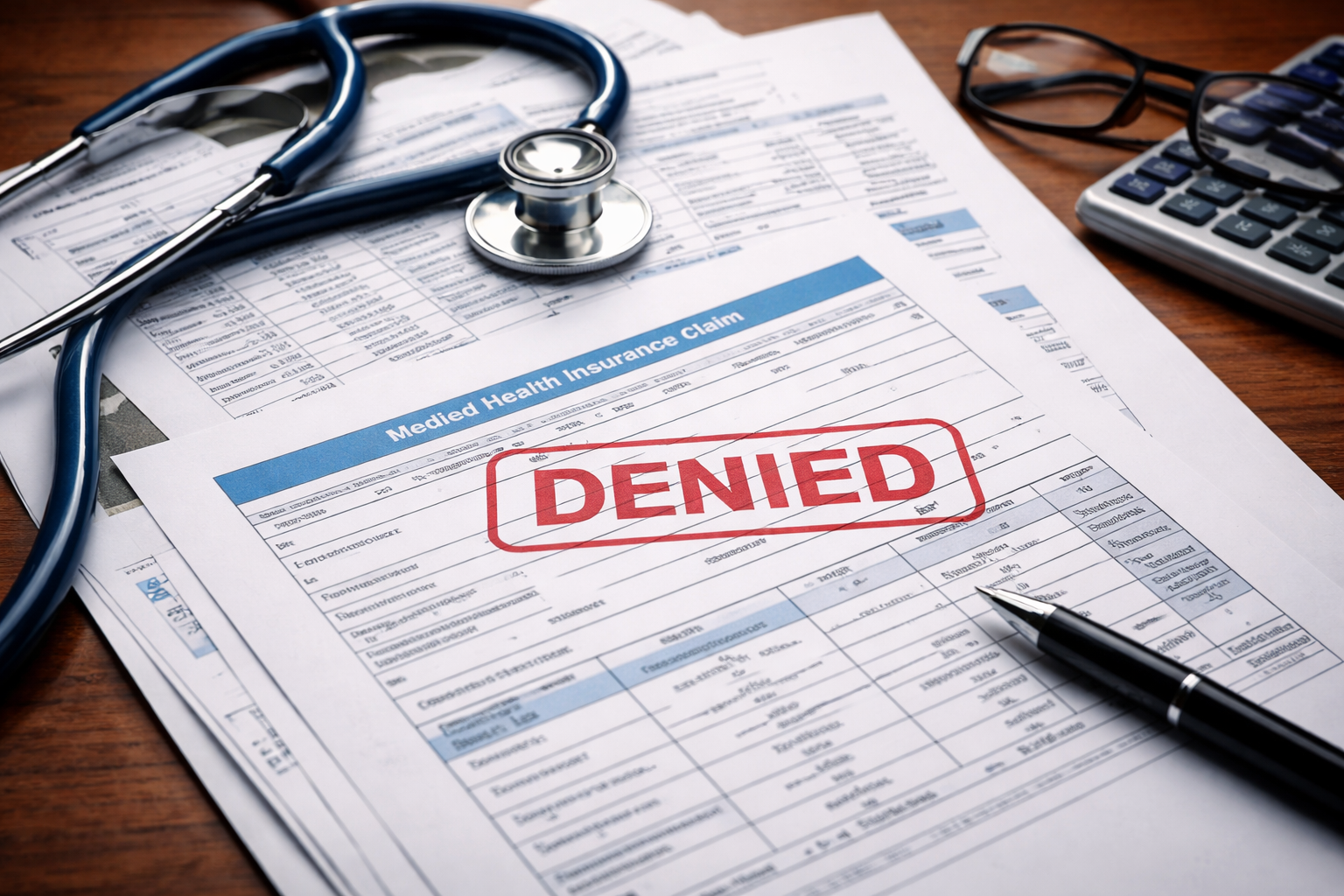
Insurance Claim Denied as Duplicate was the first thing I saw when I opened the portal—one short line that instantly turned a normal medical visit into a paperwork problem. The appointment had already happened. The provider had already billed insurance. I wasn’t trying to do anything unusual. I just needed the claim to be processed so the balance wouldn’t sit in limbo. Instead, the insurer’s system acted like the claim was a repeat submission that shouldn’t exist.
What made it worse was how “clean” the denial looked. Insurance Claim Denied as Duplicate didn’t come with a human explanation, a phone call, or even a clear next step. It was just a status, sitting there like it was a fact. And when a claim is labeled duplicate, many systems automatically stop payment before anyone investigates whether the label is even correct. If you’ve never dealt with this before, it’s easy to waste weeks by resubmitting the wrong way and accidentally creating the very duplication the insurer thinks it sees.
Before you do anything else, get oriented on how insurers categorize denials and where “duplicate” fits in the bigger map of claim outcomes. It will help you avoid filing the wrong appeal too early.
Start here for the closest hub context:
The Fast Read: What “Duplicate” Usually Means in Practice
Insurance Claim Denied as Duplicate usually means the payer’s claim engine found a “match” between this claim and another claim already in its system. That match is often based on combinations like date of service + procedure code + provider identifiers + patient identifiers. The key detail is that the match is often algorithmic, not logical. The system might be correct—or it might be matching the wrong record.
Your goal is not to argue emotions. Your goal is to identify which record the payer thinks is the “first” claim, then prove why your claim is not a repeat (or is a valid correction) and get it reprocessed using the proper workflow.
Why Insurance Claim Denied as Duplicate Happens Inside Payer Systems
Insurance Claim Denied as Duplicate tends to show up for a few specific system reasons. These are not “textbook” reasons—they’re the kinds of mismatches that happen when multiple systems touch the same claim: provider billing software, clearinghouse routing, and the insurer’s adjudication platform.
- Claim matching rules are overly strict: same date + same code = “duplicate,” even when it’s a corrected claim or a legitimate second line item.
- Multiple claim records exist: one “accepted” record and one “pended” record can both exist under different control numbers, and the payer matches the wrong one.
- Facility vs. professional billing overlaps: the hospital bills facility charges, the physician bills professional charges, and certain lines look “similar” to the payer’s duplicate logic.
- Clearinghouse re-transmits: a delayed acknowledgement can cause a re-send; the provider sees “one submission,” but the payer receives two.
- Corrected claim submitted incorrectly: the provider submits a correction as if it were a brand-new claim, so the payer flags it as a duplicate instead of a replacement.
When Insurance Claim Denied as Duplicate appears, it’s usually a routing and record-linking problem, not a “you did something wrong” problem. But it still requires precise steps, because the system will keep re-flagging if you create more claim records in the wrong lane.
Your First 10-Minute Checklist Before Calling Anyone
Insurance Claim Denied as Duplicate is easier to fix when you collect the right identifiers first. Before you call the insurer or the provider, grab these from your EOB/portal and the provider statement:
- Date(s) of service (exact)
- Provider name and location (facility vs. physician group)
- Claim number / claim control number shown in your portal
- Any denial or remark codes shown (even if you don’t understand them yet)
- Procedure description if available (or the line item text)
- Whether the provider billed as in-network or out-of-network
This checklist matters because the fastest fixes depend on matching the payer’s “duplicate reference claim” to the claim you’re trying to get paid.
Identify Which Duplicate Scenario You’re In
Case Branch A: The “Hidden Earlier Claim” You Never Saw
- Insurance Claim Denied as Duplicate appears, but you never saw any prior claim for that visit.
- Payer portal may show a different claim number with a similar date of service.
- Often happens when a claim was pended, then another record was created by correction/resubmission.
Fix path: Ask the insurer: “What is the claim number you’re matching this to?” Then ask the provider whether that earlier record was a test submission, a voided claim, or a clearinghouse retransmission.
Case Branch B: Corrected Claim Was Filed as a Brand-New Claim
- Provider corrected a diagnosis, modifier, or member ID and re-sent.
- The correction was not marked as “replacement/corrected,” so the payer sees it as repeat billing.
- Insurance Claim Denied as Duplicate repeats even after resubmission.
Fix path: Provider must submit as a corrected/replacement claim (not “original”), referencing the prior claim number. If they can’t, they should request payer reprocessing tied to the original claim record.
Case Branch C: Facility Claim and Physician Claim Collide
- You received care in a hospital/ER/outpatient setting.
- Two bills exist: facility charges and professional charges.
- Payer flags one line as overlapping and labels it duplicate.
Fix path: Ask the insurer which provider identifier they’re treating as the “duplicate.” Sometimes the payer must separate the professional and facility claim records or override a claim edit that incorrectly cross-matched them.
Case Branch D: Clearinghouse Transmission Created Two Records
- Provider insists “we submitted once,” and they may be telling the truth.
- Clearinghouse shows a resubmission or re-transmit due to delayed acknowledgement.
- Insurance Claim Denied as Duplicate appears quickly after submission.
Fix path: Provider should pull the clearinghouse report/trace number and ask the payer to identify which record is considered the “first.” The payer can often void the extra record or reprocess the correct one.
What to Ask the Insurer So You Get a Useful Answer
Insurance Claim Denied as Duplicate phone calls often fail because people ask “Why was it denied?” and get a generic script. Ask questions that force the representative to look up the duplicate match details.
- “What is the claim number you are matching this claim to?”
- “Is the reference claim paid, denied, pended, or voided?”
- “Is this flagged as a duplicate claim or duplicate service line?”
- “Can you read the internal claim edit/remark that triggered the duplicate?”
- “What is the correct method to submit a corrected claim for this situation?”
If the insurer cannot provide the reference claim number, you’re not getting a real investigation yet. Push politely until you have the reference claim number and its status.
What to Ask the Provider Billing Office (So They Don’t Accidentally Make It Worse)
Insurance Claim Denied as Duplicate is frequently solved by the provider, but only if they work the issue in the correct lane. When you call, don’t ask them to “rebill” blindly. Ask for specifics:
- “Was this submitted as an original claim or a corrected/replacement claim?”
- “Do you see multiple payer acknowledgements or multiple claim control numbers?”
- “Can you confirm the exact date of service and codes billed match the medical record?”
- “Can you send the payer a corrected claim referencing the original claim number?”
The biggest risk is the provider repeatedly sending “new” claims. That can create additional claim records and reinforce Insurance Claim Denied as Duplicate, especially if the payer’s edit logic is strict.
When “Duplicate” Is Actually a Coding/Line-Item Collision
Sometimes Insurance Claim Denied as Duplicate isn’t about the entire claim—it’s about one service line that the payer believes overlaps with another line. That’s often treated like a coding/edit problem. If your EOB shows only one line denied as duplicate and other lines processed, use this supporting guide to understand that lane.
A Clean Fix Workflow That Avoids Creating New Duplicate Flags
If Insurance Claim Denied as Duplicate is still unresolved, use a controlled workflow:
- Step 1: Get the payer’s reference claim number and status (paid/void/denied/pended).
- Step 2: Ask the provider whether any correction/resubmission occurred and whether it was marked as corrected/replacement.
- Step 3: If correction is needed, have the provider submit a corrected/replacement claim referencing the original claim number (not a new “original”).
- Step 4: If payer edit is wrong (facility vs professional collision), request payer claim reprocessing or claim edit override tied to the correct claim record.
- Step 5: If nothing moves within the payer’s stated timeframe, escalate with an internal reconsideration/appeal package that specifically addresses duplicate-match logic.
This sequence is designed to fix the record linkage first, then payment second. That’s usually the only way to stop Insurance Claim Denied as Duplicate from repeating.
What to Put in a “Duplicate Denial” Appeal Package (If It Gets Stuck)
Insurance Claim Denied as Duplicate doesn’t always require a formal appeal, but if the payer will not reprocess, an appeal package should be focused and evidence-based. The goal is to prove one of these statements:
- This claim is not a duplicate of the reference claim because the services differ (different provider/type of bill/line items).
- This claim is a valid corrected/replacement claim tied to the original submission.
- The reference claim is voided/incorrect and should not block processing.
Useful documents to include (only what you can obtain legitimately):
- EOB screenshot showing Insurance Claim Denied as Duplicate and the denial codes
- Provider statement showing the service date and billing entity
- A short provider billing office note confirming “single encounter” and whether a correction was required
- Any payer call reference numbers and the reference claim number the payer cited
Keep the package short and targeted. Overloading the payer with unrelated records can slow review and distract from the duplicate-match problem.
The “Never Do This” List (Common Errors That Extend the Denial)
Insurance Claim Denied as Duplicate is one of those denials where well-intended actions backfire.
- Don’t ask multiple departments to resubmit “fresh” claims at the same time.
- Don’t upload the same documents repeatedly through different portals unless the payer requests it.
- Don’t file multiple appeals for the same claim number simultaneously.
- Don’t assume “duplicate” means “fraud.” It often means “system match.”
Every extra submission can create another claim record, which can cause Insurance Claim Denied as Duplicate to loop again.
Your Rights and Where Official Help Exists
In the U.S., most health plans must offer an internal appeal process, and many situations also allow external review depending on plan type and state rules. For official consumer-assistance pathways, CMS provides resources that can help you locate assistance programs.
https://www.cms.gov/cciio/resources/consumer-assistance-grants
Key Takeaways
- Insurance Claim Denied as Duplicate is usually triggered by automated matching against a reference claim record.
- The fastest fix is identifying the reference claim number and confirming whether your claim is a correction or a separate valid bill type.
- Blind resubmissions can create new claim records and make Insurance Claim Denied as Duplicate repeat.
- Provider billing offices often need to submit a corrected/replacement claim referencing the original claim number.
- If the payer won’t reprocess, an appeal should focus on the duplicate-match logic and documentation, not a long narrative.
FAQ
Why did Insurance Claim Denied as Duplicate happen if the provider billed only once?
Insurance Claim Denied as Duplicate can still happen if the payer’s system received two records (for example, a clearinghouse retransmission) or if a corrected claim was filed as a new original. It can also happen when facility and professional claims overlap and the payer cross-matches the wrong record.
Is Insurance Claim Denied as Duplicate the same as “duplicate service”?
Not always. Insurance Claim Denied as Duplicate can refer to an entire claim record or just one service line that overlaps another line. That difference changes the fix, so ask the insurer whether the denial is claim-level or line-level.
Should I appeal right away?
Sometimes, but many duplicate denials are resolved faster through provider correction or payer reprocessing once the reference claim is identified. If nothing moves after the payer’s stated timeframe, then a focused appeal can be appropriate.
What if the insurer says the “duplicate” claim is already paid?
Then you need to confirm whether the paid claim was for the same billing entity and services. If the paid claim was facility-only or professional-only, the remaining claim may still be valid and the payer’s duplicate edit may need an override.
If This Starts Turning Into a Longer Denial Loop
If Insurance Claim Denied as Duplicate starts repeating across resubmissions, it can shift from a quick fix into a full denial workflow. This guide helps you structure your next moves if the claim remains denied after multiple contacts.
Insurance Claim Denied as Duplicate is frustrating because the system makes it look final when it often isn’t. The denial usually means the payer matched your claim to another record and stopped processing automatically. Once you identify the reference claim number and get the provider to correct the submission in the proper lane, many “duplicate” denials clear without a prolonged fight.
If you do one thing today, make it this: call the insurer for the reference claim number and status, then call the provider billing office with that exact information and ask whether the claim needs to be filed as a corrected/replacement claim tied to the original. Insurance Claim Denied as Duplicate is often solved by fixing the record linkage—not by generating more submissions.